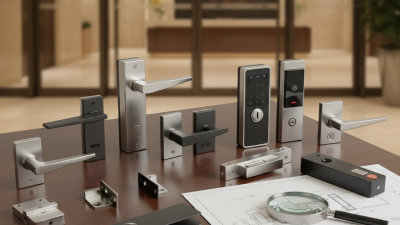
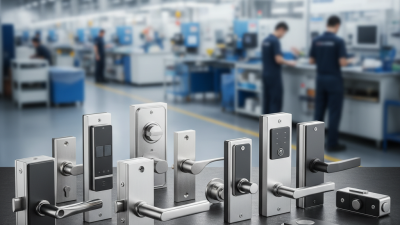
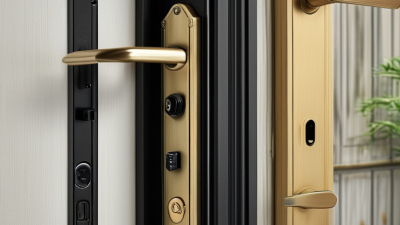
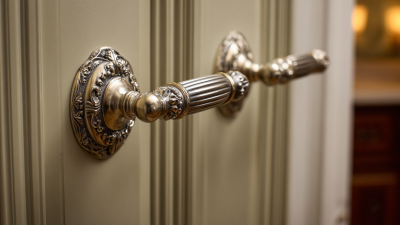
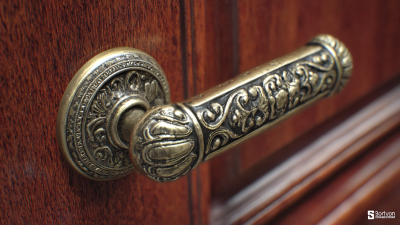
When it comes to Door Hardware, choosing the right stuff is a smart move. Sure, a door might look great, but its performance really depends on the hardware behind it. High-quality hardware isn’t just about looks — it’s about safety, durability, ease of access, and giving you confidence that everything will work smoothly day in and day out. Plus, it helps keep your project on track because genuine parts are usually available across different regions, so you’re less likely to run into delays.
Lori Greene, who’s an experienced Architectural Hardware consultant and a DHI educator, sums it up pretty nicely when she says, “A door is only as good as its hardware.” Honestly, that hits home. Think about a hotel entrance — it might be opened hundreds of times every day. The hinges need to stay aligned, the closer has to control the door’s movement properly, and the lock needs to work reliably every single time. And don’t forget, hotel hardware should also stand up to humidity, cleaning chemicals, temperature swings, and all the hustle and bustle of busy guest traffic.
So, don’t just stop at shiny finishes. Dig a little deeper. Check out the cycle-test results, material details, whether it’s compatible with fire doors, accessibility features, and how easy it is to install. It’s also smart to ask if the supplier provides clear, traceable documentation and if their technical support is quick to respond. These little details often tell you more about a supplier’s professionalism than their price quote ever could.
And trust me, paying attention to the small stuff really matters.
From my experience, I’ve seen people sometimes focus too much on getting the cheapest option without really thinking about the risks. That can lead to loose handles, noisy closers, or rust starting to show up just a few months down the line. No hardware is completely foolproof, and even the best stuff can let you down if it’s installed poorly. That’s why honest evaluations are so important. Suppliers should be upfront about what their hardware can and can’t do — explaining any limitations, maintenance needs, and regional availability — instead of hiding behind fancy marketing buzzwords.
A good manufacturer of door hardware combines proven performance with strict quality control. They also understand that big, international projects need clear communication, proper packaging, and reliable after-sales support. Choosing quality isn’t just about picking something cheap — it’s an investment in safer doors, less maintenance hassle, and avoiding those annoying surprises that no one wants.
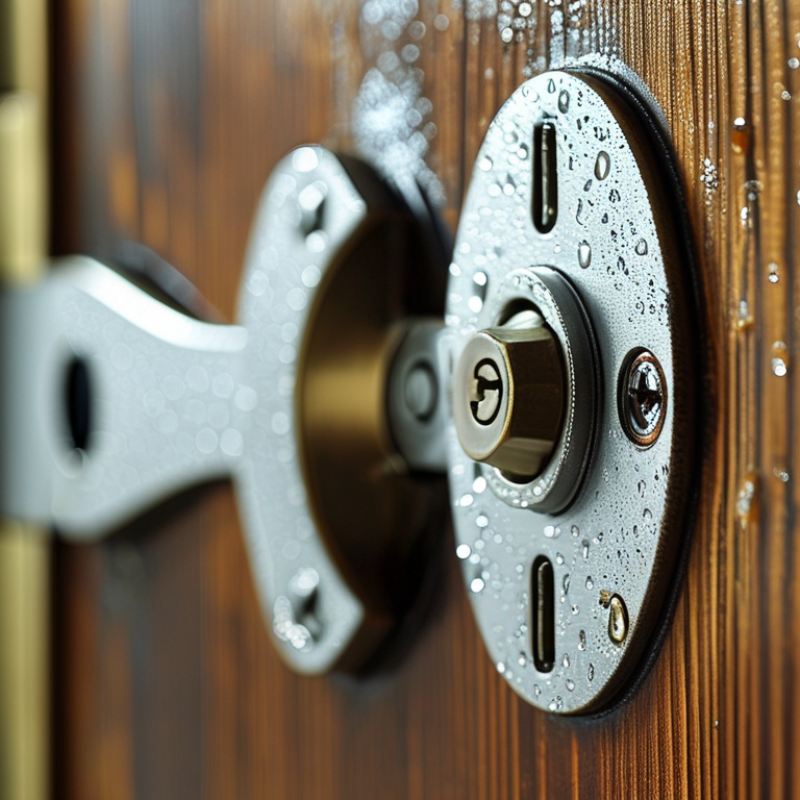
What Defines Quality Door Hardware in Global Markets?
Quality Door Hardware is defined by measurable performance, not polished photographs. Global buyers should check cycle testing, load resistance, corrosion protection, and installation consistency. EN 1906, for example, classifies lever handles by durability, safety, and corrosion resistance. Those details matter.
The ISO Survey 2023 recorded 1,265,216 valid ISO 9001 certificates worldwide. This figure shows how widely quality management systems are used, but certification alone proves little. Buyers should request batch records, material specifications, inspection reports, and corrective-action evidence. A supplier that cannot trace a hinge to its production batch creates unnecessary risk. Small details matter.
On active projects, Door Closers must control speed without slamming, even when temperatures change. Lock bodies should operate smoothly after repeated use, not only during factory demonstrations. Fortune Business Insights’ 2024 market assessment identifies construction growth and renovation demand as major drivers for door hardware. That demand can also encourage rushed purchasing. A low price may hide thin plating, weak springs, or inconsistent dimensions. Not always. Sampling remains essential.
A practical evaluation includes salt-spray results, cycle counts, spare-part availability, packaging checks, and clear installation instructions. Buyers should also compare test methods, because impressive numbers may use different conditions. Perfect specifications are rare. Good procurement leaves room for inspection, feedback, and revision before large-scale shipment.
How ANSI/BHMA Grades Measure 250,000–2 Million Operating Cycles
Why Choose Quality Door Hardware for Global Buyers?
ANSI/BHMA grades help buyers compare door hardware through controlled performance tests. Operating cycles measure repeated use, from opening and closing to latch engagement. Some commercial specifications begin near 250,000 cycles. Higher-performance products may be tested toward 2 million cycles. These figures are useful, but they need context. A cycle rating is not a promise of identical service life in every building. Door weight, alignment, traffic volume, climate, and installation quality can change the result.
Experienced buyers examine more than the grade printed on a datasheet. They check the exact product category, test method, load conditions, corrosion resistance, and fire-door suitability. Independent laboratory reports and traceable production records add credibility. A busy airport entrance may need hardware tested for frequent daily use, while a small office may require a different balance of cost and durability. Real doors differ. That matters.
In field projects, poor alignment often creates resistance before the hardware reaches its rated cycles. Dust, moisture, and loose fasteners can accelerate wear. Regular inspection and correct adjustment protect the investment, although maintenance is sometimes underestimated. I have seen impressive cycle claims lose practical value when installers ignored the frame condition. Buyers should request clear grading evidence, installation guidance, and replacement-part information before comparing quotations. A high rating is valuable, but only when the surrounding door system can support it.
Why UL 305 and EN 12209 Compliance Strengthen Door Security
Global buyers need door hardware that performs beyond a showroom sample. In daily use, a lock may face impacts, dust, humidity, and hurried operation. UL 305 and EN 12209 compliance provide measurable evidence for critical performance. They do not replace practical judgment. That distinction matters.
UL 305 focuses on panic hardware used for safe emergency exit. Testing examines operation, strength, durability, and related performance requirements. A compliant device should release reliably when occupants press or push the exit hardware. EN 12209 classifies mechanically operated locks and locking plates through defined grades. These grades address durability, security, corrosion resistance, and door-use conditions. Buyers can compare documented ratings instead of trusting polished claims. Request the test standard, classification, scope, and certificate validity.
For procurement teams, fit remains essential. A lock certified for one door type may not suit a glass entrance, fire-rated assembly, or Sliding Door Hardware application. Check dimensions, strike alignment, cycle expectations, fixing strength, and environmental exposure. Ask how samples behaved after repeated testing. The answer should include records, not vague confidence. In my experience, installation errors cause many failures. Even strong hardware can loosen when the frame is weak or adjustment is rushed. Compliance strengthens security, but maintenance and correct installation complete the real protection. Sometimes, the specification still needs revision after field feedback.
How Stainless Steel and Brass Improve Corrosion Resistance
Why Choose Quality Door Hardware for Global Buyers?
For global buyers, corrosion resistance is more than a product feature. It affects safety, appearance, and replacement costs. Stainless steel forms a protective passive layer when exposed to air. This helps Door Pull Hardware resist moisture, fingerprints, and light coastal exposure. Grades such as 304 suit many indoor projects. Grade 316 offers stronger protection where salt or chlorine is present. No material is maintenance-free.
Brass provides a warm, architectural appearance and reliable resistance in many dry or moderately humid areas. Its surface can age naturally, which some designers prefer. However, harsh chemicals and standing water may stain or weaken lower-quality brass. I have seen small gaps around pull mounts collect moisture and create early discoloration. That detail is easy to miss. Material selection should match the building’s climate, cleaning routine, and installation environment. Plated finishes also need proper testing, not attractive samples alone.
Tips: Check the steel grade and brass composition before purchasing. Ask for salt-spray or humidity-test information when conditions are demanding. Use compatible screws and washers to reduce galvanic corrosion. Wipe hardware with clean water after exposure to salt or strong cleaners. Inspect mounting points every few months. Even good specifications can fail through poor installation.
How Lifecycle Cost Analysis Reveals Long-Term Hardware Value
Why Choose Quality Door Hardware for Global Buyers?
How Lifecycle Cost Analysis Reveals Long-Term Hardware Value
A low purchase price can look attractive. It can also mislead. Global buyers should assess door hardware across its full service life, not only the invoice. A lifecycle cost review includes purchase, installation, adjustment, cleaning, spare parts, labor, and replacement. It also considers downtime when a door stops working in a busy facility.
In procurement projects, repeated failures often create hidden costs. A loose closer may damage a frame. A weak hinge may increase alignment work. Poor corrosion resistance can shorten service life in coastal or humid areas. Quality hardware usually offers more stable performance, clearer maintenance requirements, and better compatibility with local installation practices. These details matter across hotels, hospitals, offices, and public buildings.
A useful comparison starts with measured data. Buyers can request cycle-test results, material specifications, warranty terms, and replacement procedures. They should also check whether parts are available in the destination market. However, no calculation predicts every site condition. Usage patterns change. Installation quality varies. Our assumptions may be imperfect, and that deserves review. A reliable decision model should show both expected savings and possible risks. Sometimes, paying more upfront reduces labor calls and replacement waste. Sometimes, it does not. The evidence should decide.
Why Global Buyers Need ISO, CE, and Regional Code Compatibility
Global buyers need more than polished samples when selecting Shower Door Hardware. A hinge may fit the glass, yet fail under repeated movement or humid conditions. The ISO Survey 2022 recorded 1,265,216 ISO 9001 certificates worldwide, showing the value of controlled production systems. ISO 9001 does not guarantee every hinge is perfect. It proves that processes are monitored and improved.
CE compatibility also requires careful checking. The European Commission’s Blue Guide 2022 explains that CE marking applies only when relevant European Union rules cover the product. It is not a universal quality badge. Buyers should request the declaration of conformity, test scope, material details, and traceability records. Small details matter, such as stainless-steel grade, screw strength, edge protection, and the correct glass thickness.
Regional building codes create another practical challenge. Fire doors, emergency routes, accessibility clearances, and corrosion requirements can differ between markets. A product accepted in one country may need different testing elsewhere. ICC code publications remain widely used references for structural and safety requirements, but local authorities still control approval. The process is not always smooth. Certificates can be outdated, translated poorly, or disconnected from the actual batch. Experienced buyers should compare documents with physical samples, installation drawings, and current regional rules before placing large orders.
Why Choose Quality Door Hardware for Global Buyers?
Why Global Buyers Need ISO, CE, and Regional Code Compatibility
Door closer durability is one measurable indicator of hardware quality. The ANSI/BHMA A156.4 benchmark specifies different minimum cycle levels for Grades 1, 2, and 3.
Grade 1 hardware is tested for up to 2,000,000 operating cycles, while Grades 2 and 3 are tested for 1,000,000 and 500,000 cycles respectively. ISO 9001 relates to quality management systems, CE marking indicates conformity with applicable European Union requirements, and regional building codes may require additional fire, smoke, accessibility, egress, or product testing compliance. Buyers should verify the applicable requirements for each destination market.
Reference: ANSI/BHMA A156.4, Door Controls—Closers.
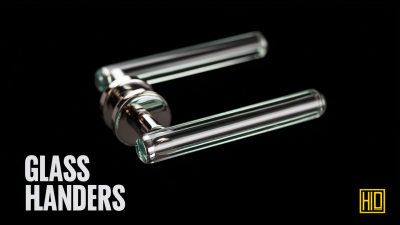
Modern Industrial Glass Doors: Styling with Square Stainless Steel & Wood Handles
Modern industrial glass doors bring together transparency, structure, and practical design, making them a strong choice for contemporary interiors. Clear or lightly tinted glass allows natural light to move between rooms while maintaining a sense of separation. Slim metal frames add an architectural edge, and the handle becomes an important detail that defines the door’s overall character.
Square stainless steel handles create a crisp, geometric appearance that complements black, gray, and other neutral finishes. Their clean lines work especially well with exposed brick, concrete surfaces, steel shelving, and minimalist furniture. For a warmer interpretation, wood handles introduce natural texture and soften the cooler quality of glass and metal. Light wood can brighten an open space, while deeper wood tones create contrast and a more grounded atmosphere.
Combining stainless steel framing with a wood handle offers a balanced industrial style without making the room feel overly severe. In offices, glass-panel doors can support visual connection between work areas, while in homes they can separate kitchens, studies, living rooms, or entryways without blocking light. Handle size, grain direction, and finish should be selected according to the door’s proportions and surrounding materials, ensuring that the hardware feels intentional rather than added as an afterthought.
FAQS
: Quality means measurable performance, not attractive photographs. Check durability, load resistance, corrosion protection, and consistent installation.
No. Certification supports a quality system, but it does not prove every batch performs reliably.
Request material specifications, cycle-test results, inspection reports, batch records, and corrective-action evidence.
Traceability connects each hinge or closer to its production records. Without it, investigating failures becomes difficult.
Check speed control, smooth operation, and resistance to temperature changes. A closer should not slam the door.
Samples reveal weak springs, thin plating, inconsistent dimensions, and installation problems. Factory demonstrations can hide these issues.
Include purchase, installation, adjustment, cleaning, spare parts, labor, downtime, and eventual replacement.
Sometimes. Better hardware may reduce service calls and replacement waste, but evidence must support the decision.
Coastal air, humidity, heavy usage, poor installation, and unavailable spare parts can increase total costs.
Compare test methods, warranty terms, packaging, installation instructions, and local parts availability. Assumptions may still need review.
Conclusion
Quality Door Hardware is essential for global buyers seeking reliable performance, safety, and long-term value. In international markets, quality is defined by proven durability, consistent manufacturing, and compliance with recognized standards. ANSI/BHMA grades help evaluate products across approximately 250,000 to 2 million operating cycles, making it easier to match hardware with residential, commercial, or high-traffic applications. Compliance with UL 305 and EN 12209 further supports secure operation, fire-related performance, and dependable mechanical function. Materials such as stainless steel and brass also provide strong corrosion resistance, helping hardware maintain its appearance and performance in demanding environments.
A complete lifecycle cost analysis shows that durable hardware can reduce replacement, repair, and maintenance expenses over time, even when its initial price is higher. Global buyers should also confirm compatibility with ISO requirements, CE expectations, and applicable regional building and safety codes. Choosing products that combine tested performance, robust materials, and international compatibility helps create safer doors, smoother installations, and more predictable long-term investment outcomes.