Inquiry
Form loading...
0%

Picking the right window hardware suppliers isn’t just about scanning through product catalogs or going for the lowest price you see online. For folks buying from all over the world, it’s really about digging deeper—checking out hinge durability, locking strength, how well it resists rust, the consistency of finishes, and how easy it is to get replacements if needed. Sure, that handle might look super sleek in a showroom, but it needs to hold up through thousands of open-close cycles—whether in a bustling apartment building, a hotel, or a home by the coast.

Rainer Müller, who’s an independent expert in hardware design, wisely points out, “A window is only as dependable as its smallest moving part.” That practical bit of wisdom is the cornerstone of this guide. We look at trusted brands like Roto Frank, Siegenia, GU, ASSA ABLOY, dormakaba, and HOPPE—all of which serve different project needs, from hidden hinges and multipoint locks to sliding systems and fancy architectural handles. But hey, just because a name is huge internationally doesn’t automatically mean it’s the best choice for your specific project.

Also, having local warehouse access really matters.

Equally important is making sure the product will fit your profile—meaning, double-check the dimensions, installation tolerances, and ensure there’s solid testing data, warranties, and clear tech info. Before you hit ‘buy,’ it’s smart to look into lead times and how responsive the supplier is after your purchase. Because let’s be honest, spending less on each unit can backfire if a missing component ends up delaying the whole installation.

Now, this comparison guide is definitely helpful, but it’s not foolproof. How well a supplier performs can vary a lot depending on where they are, which distributor you buy through, and what product line you’re eyeing. Some brands publish tons of detailed data online, while others might require you to ask directly for technical info—that’s something to keep in mind. The real key is finding that sweet spot—balancing quality engineering, reliable supply, familiarity among installers, and good after-sales support. Whenever you’re working on a big or tricky project, it’s a good idea to ask for samples first, just to make sure everything fits and works as it should.

Top Window Hardware Suppliers for Global Buyers?

What Window Hardware Suppliers Provide for Global Buyers

Window Hardware suppliers support global buyers far beyond product sales. They provide hinges, handles, locks, rollers, stays, and sealing components for different window systems. Experienced suppliers should explain material grades, load limits, surface treatments, and compatible profiles clearly. This information helps buyers avoid costly specification errors.

Reliable suppliers also offer samples before mass production. A practical sample review should check handle movement, screw alignment, coating consistency, and closing pressure. Small details matter. A loose spindle can delay installation across an entire project. Suppliers may also provide technical drawings, installation guidance, packaging plans, and replacement-part lists. These documents help distributors, fabricators, and contractors work with fewer interruptions.

Global purchasing requires stronger support. Suppliers should communicate production schedules, inspection procedures, carton protection, and shipping arrangements. They should also provide accurate compliance documents for the destination market when required. Factory photos and inspection reports can build confidence, but they should not replace independent checks. No supplier gets every detail right. A careful buyer should question unclear tolerances and test products under real conditions. We once overlooked packaging space during planning, and several corner protectors arrived damaged. That mistake showed why logistics testing deserves the same attention as product testing. Responsive after-sales service remains important when installation teams discover an unusual profile or missing component.

Key Types of Window Hardware and Their Applications

Window hardware determines how safely, smoothly, and efficiently a window performs. Hinges and friction stays support casement sashes, while rollers guide sliding windows along narrow tracks. Handles and multipoint locks provide daily control and resistance against forced entry. Window Operators are useful for high, heavy, or hard-to-reach sashes, especially in schools, offices, and ventilated industrial spaces. Restrictors can limit opening distance near balconies or busy corridors.

Material selection depends on exposure. Stainless steel suits coastal projects better than untreated steel. Powder-coated aluminum offers a practical balance for moderate climates. According to the U.S. Department of Energy, windows can account for about 25% of residential heating and cooling energy use, so compression seals, weatherstripping, and correctly adjusted hardware matter. Small gaps are not small in winter. The detail is easy to miss.

The National Fenestration Rating Council explains that certified window ratings help buyers compare thermal performance under consistent conditions. However, hardware alone cannot guarantee energy savings; installation quality, glazing, and frame design also influence results. Global buyers should check load capacity, corrosion resistance, cycle testing, and compatibility with local profiles. Industry market estimates vary widely, including forecasts from Grand View Research, because definitions of window hardware differ between reports. That inconsistency deserves caution. A cheaper operator may fit perfectly on paper, yet fail after repeated use if drainage, alignment, or sash weight was overlooked.

Criteria for Comparing International Window Hardware Suppliers

Comparing international window hardware suppliers requires more than checking catalog prices. In supplier audits, I examine material certificates, production records, and sample consistency. Ask whether Window Handles use corrosion-resistant alloys or coated steel. A bright finish can hide weak plating. Request samples from different production batches. Small differences matter. Check screw alignment, turning force, and latch return. These details reveal manufacturing discipline better than polished photographs.

Technical expertise should match the project’s climate and building type. A coastal installation needs stronger corrosion testing than an inland office. Confirm test methods, cycle counts, load ratings, and applicable regional standards. Do not accept “tested” without a dated report and laboratory identification. Review drawings, tolerances, packaging, and installation instructions. A supplier may offer excellent hardware but lack useful engineering support. That gap can delay a site team for days.

Reliability also depends on communication after purchase. Measure response times, spare-part availability, warranty limits, and realistic production capacity. Ask how rejected components are recorded and corrected. Visit the factory when possible, or request a live video inspection. I have learned that audit checklists can miss human problems. One unanswered technical question may matter more than a low quotation. Payment terms, export documents, and inspection points should be written before production starts. Keep evidence, not promises.

Top Window Hardware Suppliers for Global Buyers

Criteria for Comparing International Window Hardware Suppliers

This evaluation model prioritizes product quality and compliance, supply reliability, total landed cost, lead time, customization capability, and after-sales support. Buyers can adjust the weighting according to project risk, destination market, and purchasing volume.

Leading Supplier Regions and Their Market Strengths

Top Window Hardware Suppliers for Global Buyers?

Leading Supplier Regions and Their Market Strengths

Supplier regions often reveal more than a catalog. They show manufacturing habits, material preferences, and quality control traditions. China remains strong in high-volume window hardware, especially handles, hinges, rollers, and multipoint locking components. Its advantage is broad factory capacity and flexible customization. Buyers can request tailored finishes, packaging, and production quantities. However, factory capability varies widely. Independent audits and sample testing remain essential.

Germany and nearby Central European markets are known for precise engineering and reliable system compatibility. Their suppliers often focus on durable mechanisms, tight tolerances, and long cycle performance. These strengths suit commercial buildings and premium residential projects. Italy has particular experience with refined finishes, compact designs, and Architectural Hardware. The appearance can be excellent. Yet, buyers should confirm replacement availability before selecting a complex system.

Turkey serves buyers seeking practical pricing, regional distribution, and adaptable production. Its suppliers commonly produce handles, locks, and aluminum window accessories for varied project needs. North American suppliers often understand local construction practices, larger window formats, and stricter project documentation. This regional knowledge can reduce installation errors. Still, “local expertise” does not guarantee consistent quality. Ask for material specifications, corrosion test results, cycle-test data, and dimensional drawings. A physical sample can expose weak springs, rough edges, or loose screws faster than a polished brochure. Some buyers overlook this simple step. That mistake is expensive.

How to Verify Quality, Compliance, and Production Capacity

Top Window Hardware Suppliers for Global Buyers

How to Verify Quality, Compliance, and Production Capacity

Reliable sourcing begins with physical evidence, not attractive catalogs. Request production samples of Window Locks, hinges, handles, and fastening parts before discussing large orders. Check machining marks, spring tension, coating thickness, and smooth operation. A lock should close firmly without scraping. Test repeated cycles under dusty and humid conditions. Small defects often appear after several hundred movements.

Ask suppliers for current test reports, material declarations, and quality certificates. Confirm that each document matches the exact product model and factory address. Requirements differ between markets, so verify the relevant safety, corrosion, and performance standards with an independent laboratory. Do not accept copied certificates. Their issue dates, testing scope, and identification numbers deserve careful checking. A polished factory tour can still hide weak inspection controls.

Production capacity requires more than a monthly figure. Review equipment lists, staffing levels, mold ownership, and recent delivery records. Ask for a production schedule showing sampling, assembly, inspection, and packaging stages. Visit the line if possible, and compare inventory with claimed order volumes. My own review process would still leave room for doubt; supplier data can become outdated quickly. Require batch records, random inspections, and corrective-action reports before shipment. Clear communication matters too, especially when a supplier admits a delay instead of disguising it.

Steps for Evaluating and Selecting a Global Supplier

Selecting a global window hardware supplier starts with evidence, not attractive catalogs. Request factory photos, material certificates, process records, and recent quality reports. Ask who makes Window Hinges, where, and under which inspection procedure. A reliable supplier should explain tolerances, coating thickness, load testing, and corrosion resistance clearly. Vague answers deserve a written follow-up. Evaluate samples in your own window profiles. Check hinge movement, screw alignment, surface finish, and noise after repeated cycles.

Communication is part of quality. Set specifications in writing, including dimensions, packaging, labeling, delivery terms, and acceptable defect limits. Ask for a named technical contact and a realistic response time. During a video audit, compare the production line with the supplied documents. Confirm applicable regional standards and test documentation for your target markets. Then use an independent inspection before shipment. It costs less than correcting thousands of poorly fitted parts.

Price comparisons can mislead. A lower unit price may exclude tooling, spare parts, testing, or secure packaging. Calculate total landed cost, including freight, duties, inspection, and possible rework. Review capacity during peak seasons and ask for contingency plans. I have seen promising samples fail when batch consistency was ignored. I also accepted a polished sample too quickly; that mistake still deserves reflection. Start with a controlled trial order and record every variance. Keep those records beside the next purchase order.

Top Window Hardware Suppliers for Global Buyers? - Steps for Evaluating and Selecting a Global Supplier
Evaluation Dimension Recommended Benchmark for Global Buyers Verification Evidence and Questions Priority Suggested Weight
Product Scope Supplier should cover the required hardware families, such as handles, hinges, friction stays, locks, rollers, restrictors, and multipoint components. Request a current catalogue, technical drawings, compatible profile systems, and a cross-reference list for the buyer's window types. High 15%
Material and Finish Confirm the exact base material, coating system, colour reference, surface thickness, and resistance requirements for the target climate. Review material declarations, coating specifications, sample parts, colour approval procedures, and corrosion-test reports. High 12%
Corrosion Resistance For exposed or coastal applications, require a documented corrosion classification suitable for the project environment. EN 1670 provides corrosion-resistance grades for building hardware. Ask for laboratory reports, test duration, product identification, test standard, and whether the report applies to the quoted finish and construction. High 12%
Mechanical Performance Products should be tested for operating cycles, load capacity, locking performance, and resistance to misuse according to the applicable product standard. Request test reports, rated cycle counts, maximum sash weight, adjustment limits, and installation conditions used during testing. High 12%
Quality Management A documented quality-management system should control incoming materials, process inspection, final inspection, nonconformity handling, and corrective action. Verify the current quality certificate, certificate scope, issuing body, validity period, inspection records, and audit process. High 10%
Regulatory Compliance Supplier documentation must match the destination market, product category, chemical restrictions, packaging rules, and any project-specific legal requirements. Request declarations of conformity, restricted-substance information, safety data where applicable, and destination-country documentation samples. High 10%
Production Capacity Capacity should be assessed against forecast volume, peak-season demand, tooling requirements, and the supplier's current production load. Ask for monthly capacity by product family, standard production schedule, bottleneck processes, backup equipment, and capacity-allocation policy. Medium 8%
Lead Time and Delivery A reliable supplier should provide separate timelines for sampling, tooling, first production, repeat orders, and export preparation rather than one combined estimate. Review recent delivery records, agreed lead-time definitions, production milestones, shipment terms, and procedures for late delivery. High 8%
Minimum Order Quantity MOQ should be compatible with the buyer's launch volume, replacement demand, project size, and inventory budget. Custom finishes often require higher MOQs. Obtain MOQ by item, colour, finish, packaging format, and customization level. Confirm whether mixed-item orders are permitted. Medium 6%
Sampling and Approval The supplier should provide representative samples before mass production and maintain approved samples or control parts for repeat orders. Check sample fees, sample lead time, revision limits, approval records, and the process for handling deviations from approved samples. Medium 5%
Packaging and Labelling Packaging should prevent scratching, corrosion, missing components, and installation confusion during international transport and warehouse handling. Review packaging specifications, carton drop-test practice, moisture protection, barcode or lot coding, spare-part identification, and multilingual instructions. Medium 4%
Technical Support Supplier should provide installation instructions, adjustment guidance, compatible accessories, troubleshooting support, and responsive communication across time zones. Evaluate response time, engineering capability, drawing formats, language support, training materials, and escalation procedures for technical issues. Medium 4%
Warranty and Claims Commercial terms should clearly define warranty duration, exclusions, evidence requirements, replacement responsibility, and claim-resolution timing. Request the written warranty policy, historical claim data in anonymized form, replacement process, credit-note rules, and root-cause reporting procedure. Medium 3%
Total Landed Cost Compare product price together with tooling, samples, packaging, freight, duties, inspection, payment costs, inventory carrying cost, and expected defect cost. Use the same specification and delivery term for every quotation. Request a cost breakdown and identify charges that may change with volume or finish. High 6%
Supplier Audit and Trial Order Shortlist suppliers only after document review, sample approval, and a controlled trial order that tests quality, packaging, communication, and delivery. Use a written audit checklist, inspect critical dimensions, record nonconformities, compare delivered goods with approved samples, and score corrective actions. High 5%

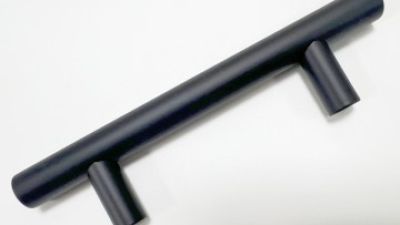
Minimalist Black Cabinet Pulls: A Contemporary Guide to Matte Finish Hardware

Minimalist black Cabinet Pulls bring a refined, contemporary character to kitchens, bathrooms, wardrobes, and built-in storage. Their clean silhouettes avoid unnecessary decoration, allowing the cabinet design and surrounding materials to remain visually balanced. A matte finish softens the appearance of black hardware by reducing glare, creating a smooth, understated surface that works well with wood grain, white cabinetry, stone countertops, and neutral wall colors. Whether shaped as slim bar pulls, compact edge pulls, or simple rounded handles, these designs can make everyday storage feel more intentional.

When selecting matte black cabinet hardware, proportion and placement are essential. Longer pulls can emphasize wide drawers and create a streamlined horizontal rhythm, while shorter handles suit smaller doors and narrow compartments. Consistent spacing helps the room look organized, especially when different cabinet sizes are arranged together. The low-sheen surface is also practical for contemporary interiors because it disguises minor reflections and complements other muted finishes such as brushed metal, textured ceramics, and natural timber. For a cohesive installation, choose matching screws and carefully measure each position before drilling, keeping the hardware aligned across doors and drawers.

FAQS

What are the main types of window hardware?

Hinges and friction stays support casement windows. Rollers guide sliding sashes along narrow tracks. Handles control daily operation. Multipoint locks improve security. Window operators help move high, heavy, or hard-to-reach sashes. Restrictors limit opening distance near balconies or busy corridors.

When are window operators useful?

They suit high, heavy, or difficult-to-reach sashes. Schools, offices, and ventilated industrial spaces often need them. A suitable operator should match sash weight and window profile. Paper compatibility is not enough.

Which materials suit different climates?

Stainless steel suits coastal exposure better than untreated steel. Powder-coated aluminum works well in moderate climates. Check coating quality and corrosion resistance. Salt air is unforgiving.

How can hardware affect energy performance?

Compression seals, weatherstripping, and correct adjustment help reduce unwanted air gaps. Windows may represent about one-quarter of residential heating and cooling energy use. Hardware alone cannot guarantee savings. Glazing, installation, and frame design also matter.

What should buyers check before selecting a supplier?

Request material certificates, factory information, process records, and recent quality reports. Confirm tolerances, coating thickness, load testing, and corrosion data. Ask for dimensional drawings. Vague replies require written clarification.

Why are physical samples important?

Samples reveal weak springs, rough edges, loose screws, and poor alignment. Test them in your actual window profiles. Check movement, noise, finish, and screw positioning after repeated cycles. Brochures can hide practical problems.

How should international buyers compare supplier prices?

Compare total landed cost, not only unit price. Include freight, duties, tooling, spare parts, inspection, packaging, and possible rework. A lower price may become expensive later. The calculation is easy to underestimate.

What quality controls should be used before shipment?

Use written specifications and acceptable defect limits. Arrange an independent inspection before shipment. Start with a controlled trial order. Record every variance for future purchases. I once trusted a polished sample too quickly. That mistake still deserves reflection.

Conclusion

Global buyers rely on Window Hardware suppliers for a wide range of products, including handles, hinges, locks, rollers, friction stays, restrictors, and ventilation components used in residential, commercial, and industrial projects. Selecting the right hardware requires understanding how each product performs in different window systems, materials, climates, and installation conditions. Suppliers should also be compared according to product consistency, customization capability, pricing, lead times, communication, packaging, and after-sales support.

Different supplier regions may offer strengths in manufacturing scale, engineering expertise, cost efficiency, or flexible production. Before placing an order, buyers should verify material quality, surface treatment, dimensional accuracy, testing procedures, certifications, and production capacity. A practical selection process includes defining technical requirements, requesting samples and documentation, assessing factory capabilities, reviewing quality-control procedures, confirming delivery arrangements, and conducting small trial orders. By combining technical evaluation with commercial due diligence, global buyers can build reliable supply partnerships and reduce quality, compliance, and delivery risks.

Amelia

Amelia

Amelia is a dedicated marketing professional at ZhaoQing Rongjin Hardware Technology Co., Ltd., a prominent player in the hardware manufacturing industry. With a deep understanding of the company's products, she excels at conveying their core advantages through compelling content. Amelia is......
Previous How to Choose Bronze Door Handles in 2026?