Picking the right Drawer Handles in 2026 isn't just about snagging something that looks good with a shiny finish or offers a great price. Today, buyers are taking a closer look at things like how durable they are, how comfortable they feel to use, how easy they are to install accurately, and whether the supplier is reliable. Sure, that handle might look amazing under showroom lights, but what happens after years of opening and closing, cleaning, or exposure to humidity? Those tiny details really matter, even if they seem minor.
This guide is all about helping you make practical choices—whether you’re working on kitchens, wardrobes, offices, hotel projects, or custom furniture. We’re talking about materials like stainless steel, zinc alloy, aluminum, brass, and responsibly sourced wood. Each one has its own benefits, costs, and maintenance needs. Then there are surface finishes—think brushed, matte black, polished chrome, antique brass, or powder coating. Before committing, it's a smart move to ask for technical drawings, measurements for hole spacing, load capacity info, sample finishes, and even photos from production. Getting the fit right is super important.
And it’s not just about the samples; solid sourcing also hinges on quality control. Ask your supplier if they perform salt-spray tests, adhesion checks, thread inspections, and packaging reviews. Be aware of relevant standards like REACH, RoHS, ISO quality systems, and packaging rules specific to your market—that stuff can vary by country, so it doesn’t hurt to verify independently. Companies like Blum, Hettich, and Häfele have built trust through consistent quality, but keep in mind that each project might need a bit of a different touch. Our comparisons can’t cover every regional preference or new finish out there—that’s worth noting. Ultimately, a good handle isn’t just about looking attractive or being cheap—it’s about how well it holds up and performs over time after installation.
Remember, the best drawer handle for you balances good looks, comfort, durability, minimum order requirements, delivery time, and total cost. Sometimes, the most affordable or decorative options aren’t the most reliable—they’re the ones that keep working smoothly for the long haul.
Drawer handles are the touchpoints between people and storage. They help users open drawers safely, quickly, and repeatedly. In 2026, buyers should treat them as functional hardware, not decoration alone. A handle must match hand size, drawer weight, surface finish, and cleaning routines. Small hardware, large consequences.
The 2024 Houzz U.S. Kitchen Trends Study found that 74% of homeowners who upgraded Cabinet Hardware chose pulls, while 24% chose knobs. This preference reflects easier gripping and better control. It also supports users with limited hand strength. In real projects, I often check the handle against the drawer’s movement, not just its appearance.Drawer Slides matter here. A smooth slide can still feel poor when the handle is too short or sharply edged. That detail is easy to miss.
For global buyers, stainless steel, aluminum, and zinc alloys offer different balances of strength, weight, and cost. The Freedonia Group’s Cabinet Hardware & Accessories analysis identifies remodeling as a major demand driver. It also notes continuing interest in updated finishes and replacement hardware. Buyers should request corrosion tests, coating specifications, hole spacing, and load-related installation guidance. Regional preferences can vary. Matte finishes may hide fingerprints, but they can show scratches under strong showroom lighting. I have also seen attractive handles fail because screws were too short. That was avoidable. The honest lesson is simple: appearance sells the sample, but tested usability supports the shipment.
Which Drawer Handle Styles Are Trending in Global Markets?
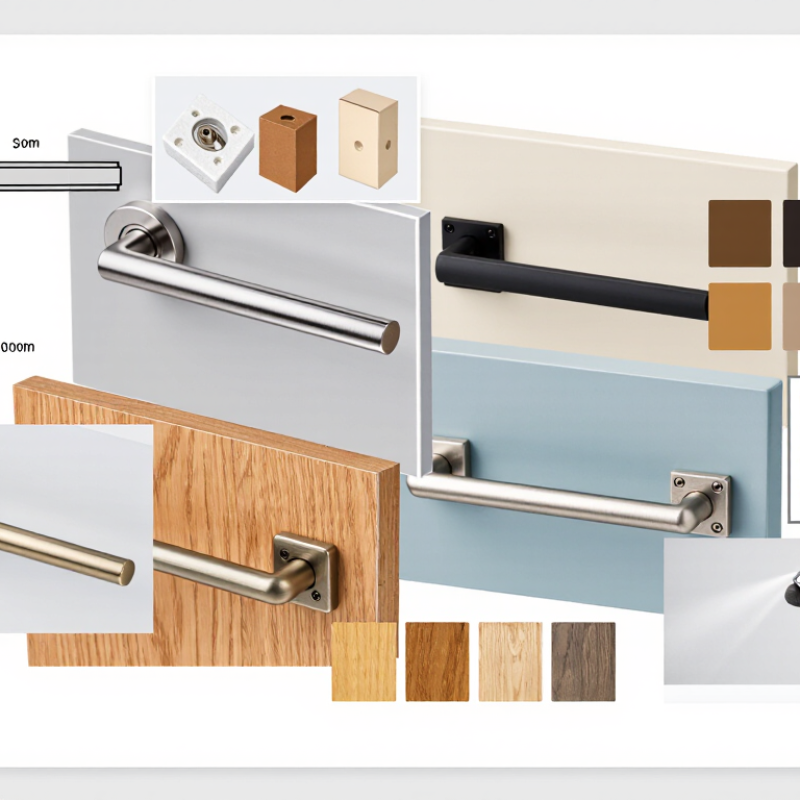
Global buyers are increasingly choosing slim bar handles with clean, geometric profiles. These designs suit modern kitchens, wardrobes, and office furniture. Brushed stainless steel remains popular because it hides fingerprints and supports frequent cleaning. Matte black still attracts attention, although scratches can become visible on busy cabinet doors.
Rounded handles are gaining ground in family homes and hospitality projects. Their softer edges feel comfortable during repeated use, especially in compact kitchens. Integrated pulls also appeal to minimalist buyers. They create a flat front and reduce visual clutter. However, they may require more precise installation and can collect dust inside narrow channels.
Material contrast is another strong direction. Designers pair warm metal with oak, textured laminate, or recycled composite panels. Tactile finishes matter more than showroom shine in many regions. Buyers often request sample pieces before approving large orders. This practical step exposes differences in color, grip, and coating quality. Regional preferences still vary. Larger handles can work well on wide drawers, while smaller pulls suit dense urban apartments. Accessibility should guide sizing, spacing, and grip depth, but it is sometimes treated as an afterthought. That needs improvement. A beautiful handle is not useful if users struggle to open it. Global sourcing teams should verify corrosion resistance, mounting strength, packaging quality, and consistent dimensions before shipment. Trends change quickly, but reliable performance remains difficult to replace.
Which drawer handle styles are trending in global markets?
The index compares relative market visibility across major global interior-design and cabinet-hardware trends, with 100 representing the strongest current signal. Slim bar handles and edge pulls lead contemporary projects, while cup pulls and natural-material details remain strong in traditional and transitional interiors.
Source: 2025–2026 directional trend index synthesized from publicly reported global kitchen, furniture and interior-design trend coverage; not a sales-volume measurement.
2026 Top Drawer Handles for Global Buyers?
How to Choose the Right Drawer Handle Materials and Finishes
Choosing drawer handle materials requires more than matching a catalog image. Consider cabinet use, humidity, cleaning habits, and expected service life. In residential kitchens, stainless steel offers dependable corrosion resistance and a firm, cool grip. Zinc alloy supports detailed shapes and usually costs less, but thin plating may wear at high-touch points. Solid brass feels substantial and develops a warmer patina, although some buyers prefer its original color. For coastal homes, test salt-air resistance instead of trusting a finish name alone.
Finishes affect appearance and daily maintenance. Brushed surfaces hide fingerprints and small scratches better than mirror-polished options. Matte black creates strong contrast, yet rough coatings may collect grease around the edges. PVD finishes can provide strong wear resistance when correctly applied, but quality varies among suppliers. Ask for coating thickness, adhesion results, and corrosion-test conditions before approving a large order. Request physical samples. Compare them under warm and cool lighting.
During sourcing, inspect screw alignment, thread quality, edge comfort, and packaging protection. A handle may look elegant online but feel sharp after ten cabinet openings. In one practical inspection, an attractive sample was rejected because its hollow body rattled during use. That decision added cost, but prevented complaints. Still, material alone does not guarantee reliability; installation and cleaning matter too. Drawer Pulls should match cabinet weight, user frequency, and local climate. Leave room for doubt. A cheaper finish can suit low-use furniture, while busy kitchens need stronger testing.
Drawer hardware should follow the drawer, not only current fashion. For slim bedside drawers, 76–96 mm center-to-center pulls usually look balanced. Medium kitchen drawers suit 128–160 mm pulls. Wide, heavy drawers often benefit from 192–320 mm handles, or two smaller pulls.
Always measure the center-to-center distance, not the overall handle length. A 128 mm drilling pattern can replace an old pull without visible holes. That detail saves rework.
Mounting changes with drawer construction. Face-frame drawers may need shorter screws or rear clearance checks. Thick slab fronts need screw lengths matched to the panel, with washers where necessary. Single-hole knobs work on light drawers, but two-point pulls reduce twisting on wide fronts. For integrated or routed drawers, test a paper template first. It exposes collisions with lips, liners, and adjacent fronts.
ANSI/BHMA A156.9 provides a useful performance reference for cabinet hardware. Installation still needs site testing. Standards do not fix poor alignment.
Keep 25–40 mm from an edge, then mock up one handle at eye level. Houzz’s 2024 U.S. Kitchen Trends Study reports a $55,000 median spend for major kitchen renovations, up 22%. That investment makes consistent drilling worthwhile. NKBA’s 2024 design reporting also tracks contemporary and transitional kitchens as leading preferences. Sleek does not mean undersized. I would order one sample first. Finishes can mislead, and a beautiful pull may feel awkward with wet hands. Minor uncertainty is cheaper than a full replacement.
Global buyers rarely compare drawer handles by appearance alone. Quality starts with the base material, machining accuracy, and surface treatment. Stainless steel should feel dense, with clean edges and no sharp burrs. Zinc alloy can offer attractive shapes, but its strength varies between suppliers. I check thread alignment, screw fit, and movement before reviewing price.
Price needs a wider calculation. A low unit cost may hide weak screws, uneven plating, or excessive packaging damage. For a fair comparison, buyers should request samples and test them on real cabinet panels. Open each drawer repeatedly. Inspect the handle after several hundred pulls. Small details matter. A handle that loosens after installation creates labor costs and customer complaints. My first comparison focused too heavily on purchase price. That was a mistake.
Durability depends on use, moisture, cleaning habits, and installation quality. In humid kitchens, the finish should resist discoloration and surface corrosion. In busy commercial spaces, thicker mounting points usually provide better stability. The same thinking applies when comparing Security Door Handles, although their load and safety requirements differ from ordinary cabinet hardware. Ask for material specifications, coating details, test methods, and replacement support. Reliable suppliers should answer clearly and provide consistent samples. Still, test claims independently when possible. Factory documents can be useful, but hands-on inspection reveals problems photographs cannot show. A slightly higher price may be sensible when it reduces replacements over several years.
Global buyers choosing drawer handles in 2026 should treat standards as a purchasing tool, not paperwork. For Wood Door Handles, ask suppliers for material grades, coating test results, dimensional tolerances, and salt-spray records. A reliable specification should state the handle length, screw size, mounting distance, and acceptable color variation. Request samples from the actual production line. Small differences matter. Confirm test methods with an independent laboratory or a local compliance adviser before placing a large order.
Packaging deserves equal attention. Handles should be separated with foam sleeves or cardboard dividers, especially when finishes can scratch easily. Inner boxes need clear quantities and product codes. Export cartons should resist moisture and show stacking limits. Ask for drop-test evidence when shipments travel long distances. A damaged carton can create hidden costs through rework, delays, and customer complaints. Packaging samples should match mass-production packaging, although suppliers sometimes change materials without notice.
Supplier evaluation should cover more than price and catalog images. Check factory capacity, quality-control checkpoints, batch traceability, and replacement procedures for defective goods. A video audit can reveal storage conditions, measuring tools, and packing discipline. Ask for recent inspection records and verifiable trade references. Do not trust polished photos alone. Leave room for doubt. Some specifications remain unclear until production starts, and that weakness deserves correction before signing. I would rather accept a slower quotation than approve incomplete test evidence.
Practical sourcing data for Furniture Hardware importers and purchasing teams
| Product / Sourcing Dimension | Typical 2026 Buyer Requirement | Useful Specification or Benchmark | Documents or Verification to Request | Importer Action |
|---|---|---|---|---|
| Common handle materials | Zinc alloy, stainless steel, aluminum, brass, or iron/steel construction | Confirm base metal, alloy designation where applicable, wall thickness, thread type, and weight tolerance | Material declaration, product drawing, sample approval, and batch inspection report | Do not approve a finish sample without confirming the underlying material and mechanical construction |
| Center-to-center hole spacing | Exact matching of the cabinet or drawer drilling pattern | Common metric sizes include 64 mm, 96 mm, 128 mm, 160 mm, 192 mm, and 224 mm; inch-based sizes are also used in some markets | Dimensioned technical drawing and measured first article | State tolerance clearly; a practical purchasing specification is often ±0.2 mm, subject to the approved drawing |
| Handle size and projection | Comfortable grip with sufficient clearance from the furniture surface | Record overall length, cross-section, projection, mounting-foot dimensions, and screw length | 2D/3D drawing, approved golden sample, and installation test | Check compatibility with drawer-front thickness and avoid screws that bottom out or fail to engage |
| Surface finishes | Consistent color, gloss, texture, and resistance to handling, moisture, and household cleaning | Typical finishes include brushed, polished, electroplated, painted, powder-coated, and PVD-type decorative finishes | Color standard, finish sample, coating process description, and test results | Define acceptable color deviation, visible defects, adhesion, abrasion, and corrosion requirements before mass production |
| Corrosion testing | Performance suitable for the intended indoor environment and market | ISO 9227 and ASTM B117 are commonly referenced salt-spray test methods; the required exposure duration and acceptance criteria must be agreed separately | Independent or laboratory test report identifying sample, finish, exposure time, and evaluation method | Treat a test method as a procedure, not as an automatic performance guarantee; specify the pass/fail criteria in the purchase contract |
| Chemical and market compliance | Documentation appropriate to the destination country and product composition | EU REACH Regulation (EC) No. 1907/2006 may apply; RoHS is relevant when the product is part of electrical or electronic equipment; requirements vary by jurisdiction | Material declaration, restricted-substance test report, and supplier compliance statement | Ask the importer’s compliance adviser or customs broker to confirm the exact destination-market obligations |
| Fastener and installation set | Correct screw type, length, head style, and corrosion resistance | Offer metric or inch fasteners according to the destination market; verify thread engagement and head compatibility | Fastener specification, torque or pull test where relevant, and installation instructions | Pack screws with each handle or in clearly identified inner bags to reduce installation errors and claims |
| Individual packaging | Protection from scratches, rubbing, moisture, and missing hardware | Use a protective bag, divider, molded tray, or paper wrap suitable for the finish; include one complete hardware set per unit | Packaging specification, drop-test photos or report, and approved packing sample | Require finish surfaces to be separated where metal parts can rub during ocean or truck transport |
| Master-carton planning | Cartons that are stackable, identifiable, and optimized for freight utilization | Specify carton dimensions, gross/net weight, units per carton, carton strength, pallet pattern, and moisture protection | Packing list, carton-mark artwork, carton measurement, and pre-shipment inspection record | Keep carton weight within the receiving warehouse’s manual-handling policy and confirm container-loading efficiency |
| Wood packaging compliance | Compliance when solid-wood pallets, crates, or dunnage are used in international shipments | ISPM 15 treatment and marking requirements commonly apply to regulated solid-wood packaging; regulations are enforced by destination authorities | Photos of the ISPM 15 mark, packing declaration, and shipping documents | Use compliant pallets or confirm whether plastic pallets and engineered wood can simplify border clearance |
| Quality-control checkpoints | Consistent dimensions, finish, function, and quantity across production lots | Use approved drawings, limit samples, visual standards, quantity checks, and functional installation checks | Pre-production, during-production, and pre-shipment inspection reports; defect photos and corrective-action records | Define critical, major, and minor defects and agree the inspection sampling plan before the purchase order |
| Supplier capability assessment | Stable production, traceable materials, reliable finishing, and export experience | Evaluate factory capacity, process control, subcontracted finishing, lead time, minimum order quantity, and tooling ownership | Factory profile, audit report, process flow, capacity statement, business registration, and sample history | Prefer suppliers that can provide batch traceability and written change notification for material, finish, or packaging changes |
| Commercial and logistics data | Transparent landed-cost planning and predictable replenishment | Confirm unit price, tooling, sample charges, MOQ, production lead time, payment terms, carton data, HS classification, and Incoterms® 2020 rule | Pro forma invoice, commercial invoice, packing list, certificate of origin where required, and freight quotation | Have the customs broker verify the final tariff classification; furniture hardware may commonly fall under HS heading 8302, but classification depends on product details and national tariff rules |
| Recommended buying sequence | Reduce quality, compliance, and delivery risks before committing to volume | Specification → sample → testing → packaging approval → pilot order → inspection → repeat order | Signed specification sheet, approved sample record, inspection plan, and change-control procedure | Link every purchase order to the approved drawing, finish sample, packaging sample, and acceptance criteria |
Buyer note: The specifications above are practical sourcing benchmarks rather than universal legal requirements. Confirm destination-market regulations, customs classification, testing scope, and packaging rules with the relevant authorities, laboratory, or customs broker before importing.
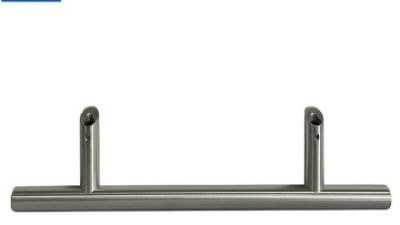
Commercial door hardware is increasingly shaped by durability, hygiene, and lifecycle-cost requirements. A 2024 market assessment estimated the global commercial door hardware sector at more than US$9 billion, with demand supported by offices, healthcare facilities, retail properties, and hospitality projects. Within this category, stainless steel offset-leg pull handles offer a practical combination of strength, corrosion resistance, and architectural flexibility. Their offset design creates comfortable hand clearance while reducing contact with the door surface, making them suitable for high-traffic entrances and contemporary interior schemes.
Material selection remains a decisive specification factor. Industry stainless-steel consumption reports indicate that construction and infrastructure account for a substantial share of global stainless-steel demand, reflecting continued preference for long-service materials in public and commercial buildings. Pull handles manufactured from 304 stainless steel are commonly selected for general indoor applications, while 316 stainless steel is better suited to coastal, humid, or chemically demanding environments. Satin, polished, and powder-coated finishes allow architects to coordinate hardware with façade systems and interior fittings, while concealed or through-bolted fixing options can improve security and installation consistency. As commercial projects place greater emphasis on accessibility, maintenance efficiency, and durable detailing, offset-leg pull handles are being specified as both functional access components and visible elements of entrance design.
Drawer handles are touchpoints for opening and closing storage safely. They provide grip, control, and repeated daily access. Small hardware, big effects.
Pulls usually offer better gripping space and control. They can also support users with limited hand strength. However, personal comfort still matters.
Match the handle with drawer weight, hand size, and movement. A short handle may feel awkward on a wide drawer. Smooth slides cannot fix poor grip.
Stainless steel, aluminum, and zinc alloys are common choices. They differ in strength, weight, price, and surface durability. The cheapest option may age poorly.
Request material grades, coating results, hole spacing, screw sizes, and dimensional tolerances. Ask for corrosion-test records and acceptable color variation. Samples should come from actual production.
Use foam sleeves or cardboard dividers between handles. Inner boxes should show quantities and product codes clearly. Export cartons need moisture resistance and stacking limits.
Check factory capacity, quality-control steps, batch traceability, and replacement procedures. Review inspection records and verifiable trade references. Polished photos prove very little.
Screws may be too short for the drawer front and mounting surface. Confirm screw length before production begins. That mistake is avoidable, but it still happens.
In 2026, Drawer Handles are more than functional hardware; they are essential details that influence furniture style, user comfort, and long-term value. Global markets are showing strong interest in minimalist bar handles, refined edge pulls, classic knobs, and ergonomic designs that support both residential and commercial applications. Buyers should evaluate materials such as stainless steel, aluminum, zinc alloy, and solid brass, while comparing finishes for appearance, corrosion resistance, and maintenance needs.
Choosing the right size and mounting option depends on drawer dimensions, furniture style, and installation requirements. Importers should compare quality, price, durability, and production consistency rather than focusing only on initial cost. Clear specifications, reliable sampling, protective packaging, accurate labeling, and dependable supplier communication are also important for efficient international purchasing. By balancing design trends, material performance, installation flexibility, and supply-chain reliability, buyers can select Drawer Handles that meet market expectations and provide lasting value.