Choosing Stainless Steel Door Handles isn’t just a small finishing touch—it’s actually a pretty important decision. These handles aren’t just for show; they guide our daily movements, handle repeated use, and really shape how a door feels when you grip it. Sure, a shiny, polished handle can look super impressive in a showroom, but after months of use, it might start showing fingerprints, scratches, or even lose some of its spring action.
Michael K. O’Brien, an expert in Architectural Hardware, once pointed out something simple but spot-on: “A handle is touched more often than it’s admired.” That really hits home. When you’re choosing, you’ve got to think about comfort, how well it resists corrosion, security, easy upkeep, and how it looks overall. For indoor areas that are protected, Grade 304 stainless steel usually works great. But if you’re dealing with coastal areas, pools, or humid environments, Grade 316 might hold up better. That said, remember: the grade isn’t everything. Things like manufacturing quality, internal parts, how firmly it’s fixed, and the finish all matter just as much.
Little details really count.
This guide offers ten handy tips to help you compare stainless steel door handles before you buy. It covers important points like door thickness, spindle size, the shape of the lever, return action, mounting plates, and cleaning needs. Plus, it explains why seeing a sample can sometimes tell you more than just looking at pretty catalog photos. A handle should feel solid and stable—not just look trendy. Its edges should be smooth when you touch them, and the fixing points should stay tight even after lots of use.
Even seasoned buyers sometimes overlook something. A handle that looks beautiful might not hold up well in high-traffic areas. A lower price tag could hide some internal flaws. The best way to make a smart choice? Check the specs carefully, test the hardware if you can, and review the warranty from the supplier. Not every product will fit every project perfectly—that’s the key. Taking your time, asking questions, and being honest about your needs will help you make the right call.
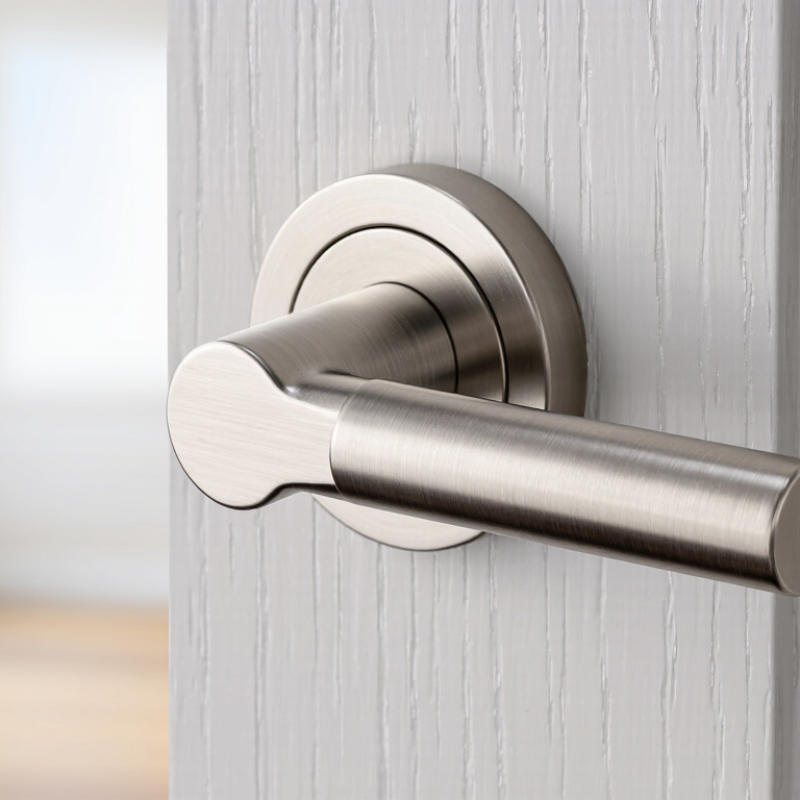
Understanding Stainless Steel Grades and Their Durability
Choosing stainless steel door handles starts with understanding the grade, not the shine. Grade 304 is a dependable choice for most indoor doors. It resists everyday moisture, fingerprints, and cleaning products well. Grade 316 contains molybdenum, which improves resistance to salt and chloride exposure. It suits coastal homes, bathrooms, and demanding commercial entrances. Grade 430 costs less, but it generally offers weaker corrosion resistance. It may work in dry interiors.
Tip: Match the grade to the environment.
Durability also depends on handle thickness, internal construction, and surface treatment. A solid, well-machined handle usually feels more stable than a thin hollow one. Brushed finishes can hide small marks better than polished surfaces. However, they do not make poor steel stronger. Check the fixing system too. Loose screws can damage a good handle quickly. Stainless steel is tough, but it is not maintenance-free. Wipe away salt, cement dust, and harsh chemical residue with a soft cloth.
Tip: Inspect the fixing hardware.
It is easy to judge quality by appearance alone. That assumption needs checking. A bright handle may have a thin coating over weaker metal. Ask for the stated stainless steel grade and product specifications. Test the lever for smooth movement and unwanted flex. In my experience, small differences become obvious after months of heavy use. Still, installation quality can change the result. Even excellent steel may corrode near trapped moisture or damaged surfaces. Choose the highest suitable grade, not automatically the most expensive option.
Matching Door Handles to Your Door Style and Function
10 Tips for Choosing Stainless Steel Door Handles
Matching Door Handles to Your Door Style and Function
A door handle should suit the door’s character and its daily workload. A slim lever complements modern flush doors, while a rounded knob can soften traditional panels. I once chose a beautiful knob for a busy kitchen door. It looked right, but wet hands made it awkward to turn. That small mistake changed how I assess hardware.
Check the door thickness, lock case, handing, and fixing points before buying. Measure twice. A handle must operate the latch smoothly without forcing the wrist. Lever handles often work well in homes, offices, and accessible spaces because they need less grip strength. For a heavy entrance door, choose a firm pull handle with a comfortable clearance. Glass, timber, and metal doors may require different mounting methods. Do not assume one fitting suits all three.
Finish matters, but function comes first. Brushed stainless steel hides light marks better than a highly polished surface. In coastal or humid areas, select corrosion-resistant Stainless Steel Fittings and clean them with mild soap. Avoid abrasive pads; they can leave visible scratches. Match the handle finish with hinges, locks, and nearby cabinet pulls for a controlled look. Still, perfect matching is not always necessary. A slight contrast can define a doorway more clearly. I am less convinced by oversized handles on narrow doors; they often feel visually heavy. Test the grip, swing the door, and listen for latch noise before final installation.
10 Tips for Choosing Stainless Steel Door Handles - Matching Door Handles to Your Door Style and Function
| Tip | What to Check | Recommended Selection | Why It Matters |
| 1 | Door style and visual proportions | Use slim lever handles for contemporary doors and more substantial, softly curved handles for traditional or paneled doors. | The handle should complement the door’s lines, panel detail, glazing and overall scale rather than appear visually oversized or too small. |
| 2 | Door function | Select passage hardware for non-locking rooms, privacy hardware for bedrooms and bathrooms, and keyed or cylinder-operated hardware where controlled access is required. | Different rooms require different levels of privacy and security. A decorative pull handle alone does not provide a latch or lock function. |
| 3 | Handle type | Choose lever handles for frequent everyday use; use pull handles for doors fitted with a separate latch or push plate; consider push bars for designated emergency exits. | Lever handles generally need less gripping force than round knobs, while pull handles and exit devices are designed for different operating methods. |
| 4 | Door thickness and backset | Measure the door thickness and the backset—the distance from the door edge to the center of the handle or lock bore—before ordering. | Incorrect measurements can prevent the spindle, latch or lock case from aligning correctly. Existing bore-hole spacing should also be checked when replacing hardware. |
| 5 | Mounting format and rose size | Match the handle’s rose or backplate to the existing holes and available door surface. Use a backplate when the lock or latch mechanism is integrated into the handle set. | The rose or backplate covers the mounting area and affects both installation compatibility and the finished appearance of the door. |
| 6 | Stainless steel grade and environment | Use a corrosion-resistant stainless steel grade suitable for the location; select hardware specifically rated for exterior, coastal, humid or high-use areas. | Moisture, salt deposits, cleaning chemicals and pollution can accelerate surface corrosion. Material suitability is more important than appearance alone. |
| 7 | Surface finish | Choose brushed or satin finishes to reduce the visibility of minor marks, polished finishes for a reflective decorative effect, or a coated finish when a specific color is required. | Finish affects reflected light, fingerprint visibility, cleaning requirements and how well the hardware coordinates with hinges, locks and other fittings. |
| 8 | Ergonomics and accessibility | Prefer easy-to-grip lever shapes with sufficient clearance from the door surface; avoid sharp edges and designs that require tight pinching or twisting. | An ergonomic handle is easier to operate for children, older users and people with limited hand strength or dexterity. Accessibility requirements may vary by building type and local code. |
| 9 | Traffic level and durability | Use robust, tested hardware for entrance doors, commercial spaces and other high-traffic locations; lighter-duty designs may be suitable for low-use interior doors. | Frequent cycles place greater stress on springs, spindles, screws and latch components. Performance ratings and cycle testing help indicate suitability for demanding use. |
| 10 | Maintenance and installation | Choose designs with secure fixings, replaceable components where available and a finish that can be cleaned with mild soap and water. Follow the installation instructions. | Correct alignment and regular cleaning help preserve smooth operation and appearance. Abrasive cleaners, steel wool and chlorine-based products can damage stainless steel surfaces. |
Measurement reminder: Before purchasing, record the door thickness, backset, bore-hole spacing, handing, lock function and mounting-hole pattern. Always verify applicable building, fire-exit and accessibility requirements for the project.
Choosing the Right Handle Shape, Size, and Grip
10 Tips for Choosing Stainless Steel Door Handles
Choosing the Right Handle Shape, Size, and Grip
A door handle should feel natural before it looks impressive. I have learned this while replacing handles in busy homes and small offices. Lever handles usually suit people with limited hand strength. Their long shape needs less twisting than a round knob. Curved levers can feel softer, while straight profiles create a cleaner, more modern appearance. However, sharp edges may catch clothing or press into the palm. Touch the handle before buying whenever possible. It reveals problems photographs cannot show.
Size affects comfort and balance. Measure the door thickness, backset, and available clearance around the frame. A long lever may look attractive, but it can hit nearby walls or furniture. For interior doors, a medium-length handle often offers better control. Larger entrance doors may need a stronger, longer grip. I once selected a handle that looked perfectly proportioned, yet it felt awkward on a narrow door. That mistake changed how I judge scale.
Grip diameter matters more than many buyers expect. A very thin handle can feel cold and tiring, especially during repeated use. A slightly rounded grip usually supports the fingers better. Check whether your hand can close around it without squeezing tightly. Stainless steel can also feel slippery with wet hands. Textured areas may improve control, but excessive texture can irritate skin. Test the handle with clean and damp hands, then compare the feeling honestly.
10 Tips for Choosing Stainless Steel Door Handles
Choosing the Right Handle Shape, Size, and Grip
Use these practical reference ranges when comparing stainless steel door handles. Lever lengths of 100–150 mm, grip diameters of 19–32 mm, and projections of 50–70 mm are common ergonomic specification ranges. The 864–1219 mm mounting-height range reflects the accessible reach range commonly used in ADA guidance. Always verify local building codes and project requirements before installation.
Comparing Finishes, Coatings, and Corrosion Resistance
10 Tips for Choosing Stainless Steel Door Handles
Finish is not merely a visual decision. Brushed surfaces hide fingerprints, while polished surfaces reveal scratches quickly. In field inspections, I have found that deep brushing can trap cleaning residue. Small details matter. Choose a consistent grain direction for busy entrances. Stainless Steel Push Pull Plates should match the handle’s finish and maintenance demands. Physical vapor deposition coatings can add color and wear resistance. However, a damaged coating may expose the underlying metal. Ask for adhesion and abrasion test results, not attractive samples alone.
Corrosion resistance depends on alloy, location, cleaning, and installation. Grade 316 generally performs better near salt or chlorides because molybdenum improves resistance. Grade 304 can suit many indoor environments, but it is not universally safe. The NACE IMPACT study estimated global corrosion costs at about $2.5 trillion annually, equal to roughly 3.4% of global GDP. That figure supports preventive material selection. ISO 9223 helps classify atmospheric corrosivity, yet a laboratory salt-spray result should not be treated as a complete service-life prediction. ASTM B117 testing is useful for comparison, but real doors face fingerprints, moisture cycles, chemicals, and impact. Specify passivation, suitable fasteners, rounded edges, and drainage-friendly geometry. I would also inspect concealed edges during acceptance checks. They are often forgotten. A lower-cost coating can look excellent initially, but replacement labor may outweigh the saving. Ask for documented alloy certificates, coating thickness, cleaning guidance, and corrosion-test conditions before approving the hardware.
Evaluating Safety, Maintenance, and Long-Term Value
Choosing stainless steel door handles is less about shine than daily safety, cleaning effort, and replacement cost. In busy homes, I examine the grip, fixing screws, and door edge before judging appearance. A smooth lever should open without sharp edges or awkward resistance. Check that the handle returns fully after use. Small movement can become a loose fitting later.
Material quality matters. Austenitic stainless steel usually offers strong corrosion resistance, but the exact grade and finish still deserve checking. Ask for clear material specifications and testing information. A brushed surface often hides fingerprints better than a mirror finish. It also makes minor scratches less obvious. Avoid hollow parts that flex under firm pressure. That detail is easy to miss.
Maintenance should remain simple. Wipe the surface with mild soap and water, then dry it with a soft cloth. Harsh cleaners may damage the finish over time. I once chose appearance over screw quality, and the handle needed adjustment within months. That was an expensive lesson. Wood Door Handles can feel warm and attractive, but stainless steel may suit damp entrances better. Compare both for grip comfort, humidity exposure, and repair access. A reliable handle should still feel solid after years of repeated use, not only on installation day.
Stainless Steel Commercial Door Pull Handles with Offset Leg Design: A Practical Buying Guide
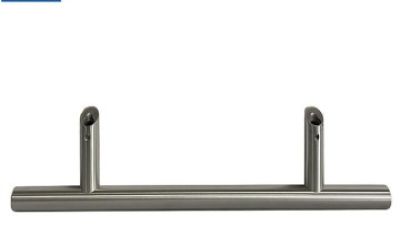
Stainless steel commercial door pull handles with an offset leg design combine practical performance with a clean architectural appearance. The offset structure creates additional clearance between the grip and the door surface, making the handle easier to grasp, especially on heavy entrance doors or doors used frequently throughout the day. When choosing a handle, consider the overall length, grip diameter, projection, and center-to-center hole spacing to ensure comfortable use and a proper fit.
Material quality is essential in commercial environments. Stainless steel offers strong resistance to corrosion, moisture, and daily wear, while a brushed or satin finish can help reduce the visibility of fingerprints and minor marks. Check whether the handle is suitable for the door material and thickness, and confirm that the mounting hardware provides a secure connection. Through-bolts or reinforced fixing systems are often preferable for high-traffic applications because they distribute pulling force more effectively.
The offset legs should be shaped and positioned to provide stable support without creating sharp edges or unnecessary obstruction. Review installation requirements before purchasing, including the required tools, mounting clearance, and compatibility with back-to-back or single-sided installation. For entrances exposed to weather or frequent cleaning, select a finish and fastening method designed to maintain appearance and structural reliability over time.
Conclusion
Choosing the right Stainless Steel Door Handles requires more than selecting an attractive design. Start by understanding stainless steel grades, as higher-quality materials generally provide greater strength, durability, and resistance to rust and daily wear. Consider how the handle will match your door’s style and purpose, whether it is intended for a home, office, bathroom, entrance, or high-traffic area. The handle’s shape, size, and grip should feel comfortable and suit the users who operate it regularly.
It is also important to compare finishes and protective coatings, especially when the handles will be exposed to moisture, humidity, or outdoor conditions. Before purchasing, check lock compatibility, door thickness, fixing methods, and installation requirements to avoid fitting problems. Finally, evaluate safety features, cleaning needs, and long-term value. A well-designed handle should be easy to maintain, secure, comfortable to use, and durable enough to provide reliable performance for many years.