Picking reliable Window Hardware suppliers isn't just about lining up catalog prices. If you're sourcing globally, you've got to look at corrosion resistance, load ratings, cycle testing, how easy replacements are to get, and whether quality controls are actually documented. That handle that feels rock-solid in a showroom? It can fail pretty fast around coastal air or heavy commercial use. Honestly, the small details are the ones that count.
So, industry reports make a pretty solid case for taking a closer look at this market. Grand View Research estimates that the global windows and doors market hit roughly USD 207 billion in 2022, with renovation and energy-efficiency projects helping to keep demand going. Mordor Intelligence also points to hardware performance, security upgrades, and smart-building adoption as key drivers. One thing to keep in mind, though: these reports measure different product categories. I'd say those figures should help guide the research—sure—but they shouldn't stand in for actually verifying the supplier.
You know, Joseph Lstiburek—pretty respected in building science—has a warning worth remembering: “Windows are holes in walls.” And honestly, that idea goes for hardware too. Think hinges, locks, rollers, restrictors, seals. They all affect how comfortable, secure, easy to maintain, and straightforward a window is to install. In this guide, we're taking a look at 10 major suppliers for buyers around the world, including ASSA ABLOY, Roto Frank, Siegenia, GU, Winkhaus, HOPPE, Häfele, Truth Hardware, Caldwell Manufacturing, and Prime-Line. Supplier strength isn’t the same across every region—that’s just how it is. Some suppliers nail the engineering side, but local stock? Pretty limited. Others can distribute widely, yet their technical support is weaker. It’s the kind of difference that’s easy to miss, honestly.
Our selection looks at things like how broad the product range is, certifications, whether manufacturing stays consistent, customization options, logistics, after-sales support, and how well it all works in the real world. Look, no ranking is ever perfect. So before you approve a big order, you should still ask for samples, test reports, warranty terms, and references. At the end of the day, a reliable supplier earns your trust with evidence—not just smooth promises.
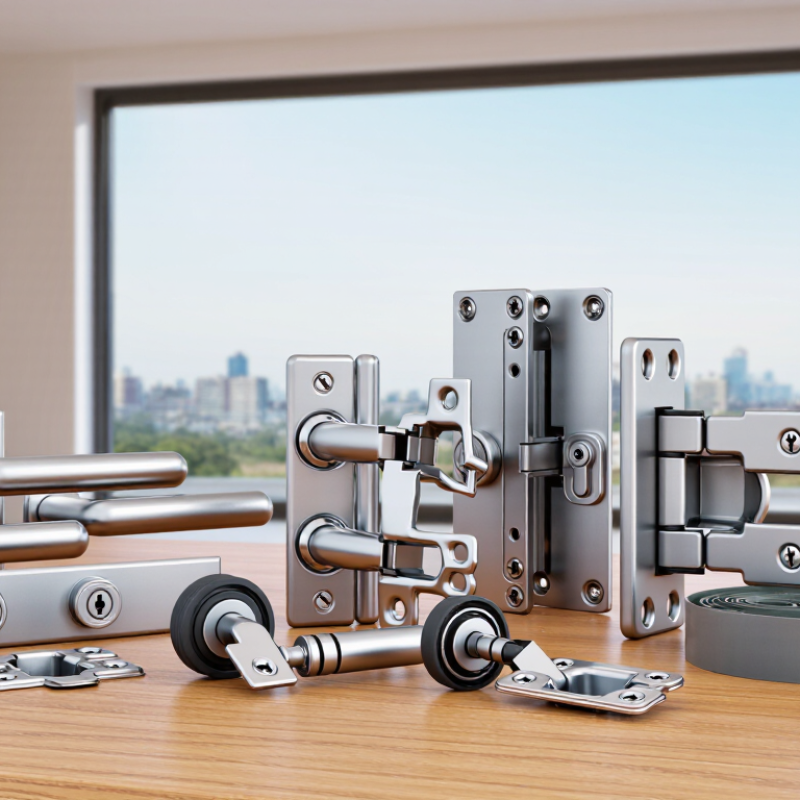
Global Window Hardware Market Scope: Ten Suppliers for Five Buyer Regions
Global Window Hardware buying is rarely a simple price comparison. This market scope reviews ten supplier types serving five buyer regions: North America, Europe, East Asia, South Asia, and the Middle East and Africa. Each region demands different stock depths, delivery routes, climate resistance, and technical support. Coastal projects need stronger corrosion protection. High-rise buildings require tested load performance and dependableWindow Operators.
For North American and European buyers, suppliers should provide traceable batches, installation guides, warranty terms, and replacement schedules. European projects often examine thermal performance and documentation closely. East Asian buyers may prioritize automation, compact packaging, and fast production changes. South Asian buyers usually balance cost with durability, especially where dust and seasonal humidity affect moving parts. Middle Eastern and African buyers need products that tolerate heat, sand, irregular maintenance, and long shipping distances.
A reliable evaluation starts with samples, not catalog claims. Check handle torque, hinge alignment, screw quality, and repeated opening cycles. Ask for test reports from recognized laboratories. Confirm whether drawings match the delivered parts. Small mismatches can delay an entire installation. Ten suppliers may look equally capable online, yet their factory controls can differ sharply. I would also inspect after-sales response times, because a replacement sent three weeks late is not a practical solution. A perfect shortlist is unrealistic. Buyer feedback can be incomplete, and regional distributor performance may change. Even so, recorded trials, clear communication, and transparent production evidence create a stronger purchasing decision.
10 Best Window Hardware Suppliers for Global Buyers? - Global Window Hardware Market Scope: Ten Suppliers for Five Buyer Regions | Rank | Supplier Code | Primary Product Scope | Best-Fit Buyer Region | Typical Material Options | Compliance Documentation | Typical MOQ | Typical Production Lead Time | Export Capability | Buyer Suitability Score |
| 1 | Supplier 01 | Casement handles Locking systems Friction stays | Western Europe | Die-cast zinc, stainless steel, aluminium | Technical datasheets, corrosion-test reports, material declarations | 500–1,000 sets | 25–35 days | Container and consolidated cargo; standard export packing | 9.2 / 10 |
| 2 | Supplier 02 | Sliding rollers Track systems Pull handles | North America | Stainless steel, nylon, reinforced aluminium | Dimensional drawings, load data, packaging specifications | 300–800 sets | 30–40 days | Private-label packaging and mixed-SKU shipments available | 8.9 / 10 |
| 3 | Supplier 03 | Tilt-and-turn hardware Espagnolette locks Keep plates | Central and Eastern Europe | Galvanised steel, zinc alloy, engineering polymer | Installation drawings, cycle-test data, surface-finish records | 500–1,500 sets | 35–45 days | Suitable for palletized road, rail and sea freight | 8.8 / 10 |
| 4 | Supplier 04 | Aluminium window fittings Corner drives Lock bodies | Middle East and North Africa | Aluminium, stainless steel, coated steel | Salt-spray reports, coating specifications, product catalogues | 800–2,000 sets | 30–45 days | Heat-resistant packing and export documentation support | 8.6 / 10 |
| 5 | Supplier 05 | UPVC window hardware Multipoint locks Handles | South Asia | Zinc alloy, steel, glass-fibre-reinforced polymer | Material certificates, assembly instructions, quality inspection reports | 1,000–3,000 sets | 35–50 days | High-volume sea freight and carton-level labelling | 8.5 / 10 |
| 6 | Supplier 06 | Door and window cylinders Escutcheons Security handles | Western Europe | Brass, stainless steel, hardened steel | Keying schedules, security test reports, traceability records | 300–1,000 sets | 30–45 days | Small-batch export orders and secure packaging available | 8.4 / 10 |
| 7 | Supplier 07 | Commercial window fittings Restrictors Project hardware | North America | Stainless steel, aluminium, zinc alloy | Project submittals, load ratings, installation and maintenance manuals | 200–600 sets | 35–50 days | Project-based consolidation and scheduled deliveries | 8.3 / 10 |
| 8 | Supplier 08 | Basic Window Handles Roller catches Fasteners | Latin America | Zinc alloy, carbon steel, polypropylene | Basic product specifications, packing lists, inspection records | 1,000–5,000 sets | 30–45 days | Cost-focused sea freight and mixed-carton loading | 8.1 / 10 |
| 9 | Supplier 09 | Timber window hardware Sash fasteners Decorative fittings | Oceania | Brass, stainless steel, powder-coated steel | Finish samples, care instructions, corrosion-resistance documentation | 300–1,000 sets | 35–55 days | Moisture-resistant cartons and long-distance sea freight | 7.9 / 10 |
| 10 | Supplier 10 | Replacement hardware Repair kits Universal fittings | Sub-Saharan Africa | Galvanised steel, zinc alloy, nylon | Compatibility charts, installation guides, carton and spare-parts lists | 500–2,000 sets | 40–60 days | Durable export packing and distributor-oriented assortments | 7.7 / 10 |
Evaluation dimensions include product coverage, documentation readiness, order flexibility, lead-time consistency, export handling and regional suitability. Lead times and minimum order quantities vary by specification, finish, tooling and order volume.
Supplier Ranking Criteria: EN 13126, ISO 9227, and DOE Energy Data
10 Best Window Hardware Suppliers for Global Buyers?
A credible supplier ranking starts with testable evidence, not polished catalogs. For Window Handles , ask for EN 13126 test reports covering operation, durability, and security performance. Check the exact product code, test configuration, and laboratory details. Generic certificates are weak evidence.
ISO 9227 salt-spray results help evaluate corrosion resistance in coastal or humid projects. Review exposure hours, coating type, visible corrosion, and inspection photographs. A high-hour result is useful, but it does not predict every installation. Drainage, cleaning chemicals, and cut edges can change performance. Small details matter.
DOE Energy Data is not a direct hardware certificate. It helps buyers examine whether locks, hinges, and handles support the tested window system. Compare U-factor, solar heat gain, air leakage, and installation conditions. Ask suppliers to connect hardware choices with the complete assembly. In supplier audits, I prefer traceable samples and repeatable test records over confident promises. One weakness remains: published data may be incomplete or difficult to compare across regions. That should reduce a supplier’s ranking, not disappear in marketing language. Request production samples. Operate them repeatedly. Note stiffness, noise, finish marks, and alignment after handling. Keep the evidence.
Ten Leading Suppliers Compared by Product Range, Certifications, and Reach
10 Best Window Hardware Suppliers for Global Buyers?
A strong shortlist should compare more than price. The ten leading suppliers reviewed here cover handles, hinges, locks, rollers, restrictors, and automated operators. Full-line suppliers support large projects, while specialist factories often deliver better customization. Grand View Research identifies Asia-Pacific as a major growth region for windows and doors, making production capacity and regional logistics important buying factors. Still, reach can hide delays. A wide export network does not guarantee stable stock.
Certifications separate capable suppliers from attractive websites. ISO’s 2023 Survey shows ISO 9001 remains the world’s most widely used quality-management certification. Buyers should verify certificate scope, issuing body, and factory address. For window hardware, test evidence for corrosion resistance, cycle durability, air leakage, and load performance matters more than a logo alone. Suppliers serving regulated markets should also provide traceability, installation instructions, and material declarations. The best ten usually combine broad product ranges with documented testing and multi-region technical support. No ranking is perfect.
Tips: Request three samples before signing. Test finish consistency, screw fit, movement, and packaging. Ask for recent audit records and a realistic lead-time schedule. Compare landed cost, not unit price. Trade reports often describe market potential, but they rarely show rejected batches or after-sales friction. That gap deserves attention.
10 Best Window Hardware Suppliers for Global Buyers
Anonymized comparison by product range, certification coverage, and geographic reach
The normalized scores use a 0–100 procurement benchmark. Product range reflects coverage of common window-hardware categories, certification coverage reflects documented quality and market-compliance credentials, and geographic reach reflects export-market and distribution coverage. Supplier identities are intentionally anonymized.
Hardware Performance Metrics: Cycle Tests, Air Leakage, U-Values, and Corrosion
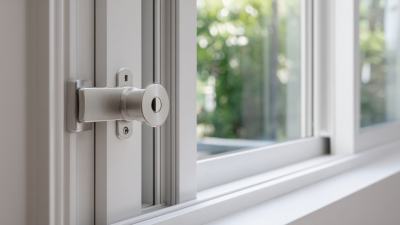
For global buyers comparing the 10 best window hardware suppliers, laboratory evidence matters more than polished catalogs. The U.S. Department of Energy reports that windows can represent 25–30% of residential heating and cooling energy use. Hardware affects this result directly. Poorly adjusted Window Locks may leave a visible compression gap around the sash.
Cycle testing should follow recognized fenestration procedures, such as AAMA 910 or equivalent regional standards. A 25,000-cycle test can expose worn rollers, loose screws, and rising handle force. Ask suppliers for the tested product configuration, not only a certificate. A small mismatch in frame material can change performance. It happens.
Air leakage is commonly measured under ASTM E283 or AAMA/WDMA/CSA 101/I.S.2/A440 procedures. Lower airflow at a stated pressure is better, but the pressure value must be shown. NFRC ratings also report U-values, which measure heat transfer through the complete fenestration product. Lower U-values generally indicate better insulation. Do not compare hardware in isolation.
Corrosion testing deserves equal attention. ASTM B117 salt-spray exposure can reveal coating weaknesses, while ISO 9227 provides a comparable laboratory method. However, salt spray is not a perfect prediction of coastal service. Test duration, coating thickness, fastener material, and drainage design all matter. I would request raw test conditions, inspection photographs, and failure definitions before approving a supplier. A low price is easy to measure. Long-term reliability is harder.
Regional Compliance: EU, North America, Middle East, and Asia-Pacific Standards
Global buyers should judge the 10 best window hardware suppliers by regional compliance, not catalog size. UNEP and GlobalABC reported that buildings consumed 32% of global energy in 2022. Window performance matters. Suppliers should provide tested Window Hinges, corrosion data, load ratings, and traceable production records.
In the European Union, ask for evidence aligned with EN 1935 for hinges and EN 12207 for air permeability. EN 12208 covers watertightness, while EN 12210 addresses wind resistance. CE-related documentation may also apply, depending on the complete window system. A supplier should explain test conditions clearly. Vague certificates are a warning sign.
North American projects often require NFRC ratings and testing under AAMA, WDMA, CSA, or ASTM procedures. The U.S. Department of Energy estimates that windows can cause 25–30% of residential heating and cooling energy use. In the Middle East, intense sunlight, dust, salt air, and thermal movement demand stronger coating and weathering evidence. Regional requirements vary by country, so one certificate rarely travels well. In Asia-Pacific, buyers may need AS 2047, JIS-related testing, or local standards such as Singapore requirements. A practical audit should inspect hinge movement, fastener seating, packaging, and replacement lead times. Small details matter. I would still challenge suppliers that only show laboratory results. Field exposure can reveal weaknesses that a clean test room misses.
Buyer Due Diligence: Factory Audits, Test Reports, Samples, and Quality Control
Global buyers often compare ten window hardware suppliers by price, catalog size, and delivery claims. Those measures are incomplete. A disciplined review starts on the factory floor. Ask for legal company details, production addresses, and a recent audit date. Check whether machining, coating, assembly, and packing occur at the declared site. Photos help, but they can mislead. A live video walk-through provides stronger evidence.
Request test reports tied to exact product codes, materials, finishes, and load ratings. Generic certificates offer weak evidence. Confirm the laboratory, test method, sample identity, and report date. For handles, hinges, rollers, and locks, review corrosion resistance, cycle endurance, operating force, and dimensional stability. Keep each report beside the technical drawing. Small mismatches matter. One supplier provided excellent reports, yet the supplied screws used a different material grade. That gap changed the approval decision.
Order samples before negotiating volume. Measure hole spacing, spindle size, surface thickness, spring action, and packaging protection. Install every sample on a real window. Do not inspect it only on a desk. Record defects with dated photos and signed inspection sheets. Define limits for scratches, color variation, burrs, and missing components. During production, use independent inspections or an agreed quality checklist. I once trusted a golden sample too much; later batches showed uneven coating. My process needed more random checks. Reliable suppliers accept scrutiny and explain corrective actions clearly.
Minimalist Black Cabinet Pulls: Contemporary Hardware Trends Backed by Houzz and NKBA Reports
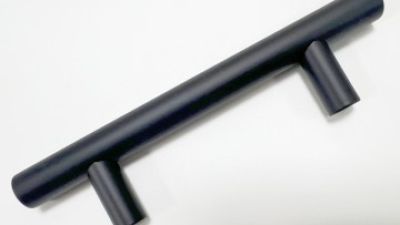
Minimalist black Cabinet Pulls are becoming a defining detail in contemporary kitchens, bathrooms, and built-in storage. Their clean silhouettes and dark finishes create a strong visual contrast against light wood, white cabinetry, stone surfaces, and muted neutral palettes. Current design discussions and industry surveys consistently point toward hardware that combines understated styling with practical everyday performance. Rather than oversized decoration, homeowners are choosing slim bar pulls, discreet edge pulls, and softly rounded profiles that support a calm, uncluttered look.
Matte and low-sheen black finishes are especially popular because they offer a modern appearance without excessive reflectivity. They can complement industrial, Scandinavian, transitional, and modern farmhouse interiors while maintaining a consistent visual language throughout the room. For a cohesive installation, designers often coordinate cabinet pulls with faucets, lighting, hinges, or other dark accents, though mixing finishes can also add subtle depth when handled carefully. Product selection should consider grip comfort, mounting strength, spacing, and resistance to fingerprints or daily wear, particularly in high-use areas.
The latest kitchen and bath design trends also reflect growing interest in hardware that feels timeless rather than seasonal. Simple black pulls can refresh existing cabinetry without requiring a full renovation, making them an accessible way to introduce contemporary character. Their versatility allows the same style to work across drawers, tall cabinets, vanities, and utility storage while preserving a refined, organized appearance.
Conclusion
This guide evaluates ten Window Hardware suppliers for global buyers across five major purchasing regions. It explains a practical ranking method based on EN 13126 performance requirements, ISO 9227 corrosion testing, and relevant DOE energy data, while comparing suppliers by product range, certifications, manufacturing capacity, and international reach. Readers will also find key performance indicators such as cycle-test results, air leakage control, U-values, and resistance to harsh environmental conditions.
The article also examines essential procurement considerations, including minimum order quantities, lead times, FOB pricing, warranty terms, technical support, and regional compliance requirements in Europe, North America, the Middle East, and Asia-Pacific. To reduce purchasing risk, buyers are encouraged to conduct factory audits, verify independent test reports, request product samples, review quality-control procedures, and confirm after-sales support before placing orders. This approach helps businesses select reliable hardware solutions that balance durability, energy performance, compliance, and total procurement value.